
Festivals
Diwali interior decoration in a Pune flat: what to make permanent, and what to buy cheap
Most Diwali decorating is spent on things that are in a bin by December. A practical guide to the three decisions that keep working all year — lighting, the mandir corner, and one feature wall — and the ones that are genuinely better bought cheap and thrown away.
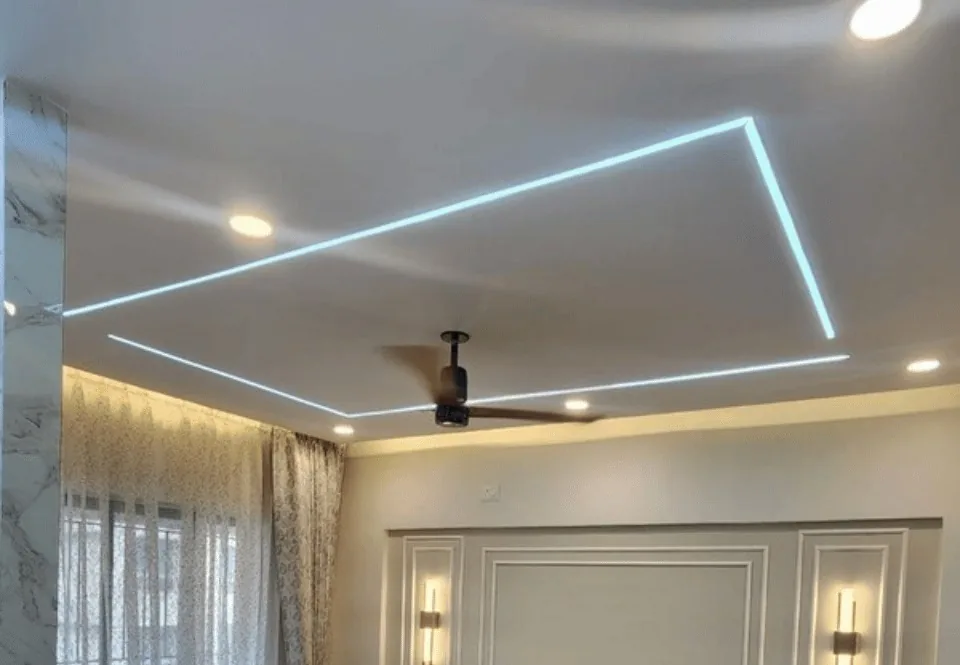
Decorating for one week, or for the next ten years?
Almost every regret we hear after a festival traces back to one unasked question: was this meant to last a week, or a decade? People spend serious money on things that are in a bin by December — custom-printed backdrops, heavy artificial flower walls, stick-on panels that pull the paint off when they come down. Then they spend nothing on the cove circuit that would have changed how the room feels every single evening for ten years.
The fix is not to spend more. It is to sort the list into two columns before you spend anything. Temporary things should be cheap, cheerful and genuinely disposable. Permanent things should be few, properly done, and chosen because you would want them in an ordinary February week with no guests coming.
Everything below is sorted that way. Three things are worth building in. The rest you should deliberately buy cheap.
Lighting is the only Diwali decoration most flats should make permanent
Festive lighting is the one category where the temporary version and the permanent version do the same job, and the permanent version does it better for the other fifty-one weeks. A cove running the perimeter of the living room, on a dimmer of its own, gives you the same warm wash that people try to fake with string lights taped to a curtain rod — except it is clean, it is wired properly, and it does not come down.
Two specifics matter more than the strip itself. Put the cove on its own switch, separate from the ceiling lights, so you can run the room on cove alone in the evening; that single scene is what makes a flat feel finished. And use a warm colour temperature, somewhere in the 2700K to 3000K range. Cool white reads clinical against wood, brass and skin tones, which is exactly the wrong note for a festival.
If a full false ceiling is not on the cards, a surface-mounted profile or a slim pelmet detail above the curtain line achieves most of the same effect for a fraction of the work. What you should not do is leave driver boxes buried somewhere unreachable — when a strip fails in year four, someone has to get to it without cutting three metres of plaster.
The mandir corner deserves a designed unit, not a shelf and a dupatta
The pooja space is the one part of the house that is unambiguously in use at Diwali, and it is the part most often improvised. A console table, a draped cloth backdrop, an extension board trailing across the floor to power a string of lights, and diyas sitting on a laminate surface with no heat clearance. It works, until the year it does not.
A designed unit is not a luxury item. It is a stable shelf at a height you can actually reach, a back panel in a material that tolerates heat and smoke, clearance above the lamps, a dedicated task light rather than a borrowed one, and a switch and socket placed where they are needed so nothing trails. Jali screens, marble or a stone-look laminate back, and a brass or warm-metal detail all read well and all clean easily — which matters more than it sounds when agarbatti residue settles for a year.
One ventilation note specific to modern towers: smoke detectors in newer buildings are sensitive, and a sustained agarbatti or havan session near one will set it off. Plan where the smoke goes before you plan how the corner looks.
One feature wall does more than ten strings of tinsel
If you want the room to look different for Diwali and you have the budget for exactly one real change, make it a single wall. The wall behind the TV, the wall behind the sofa, or the entry wall people see in the first three seconds. One of them, finished properly, resets the whole room in a way that scattered decoration never does.
Fluted or slatted wood panelling is the current default and it earns it — vertical lines make a standard flat ceiling look taller, and it photographs well under warm light, which is half of why anyone decorates for Diwali now. A stone-look or marble-effect panel behind the TV does the same job in a cooler register. Texture paint is the cheapest of the three by a distance and, done well with a proper base coat, is the one that most reliably still looks deliberate in five years.
The thing to avoid is the peel-and-stick shortcut. Adhesive panels and large-format wall stickers come off in October of some future year taking the top layer of paint with them, and the repair costs more than the panel ever did.
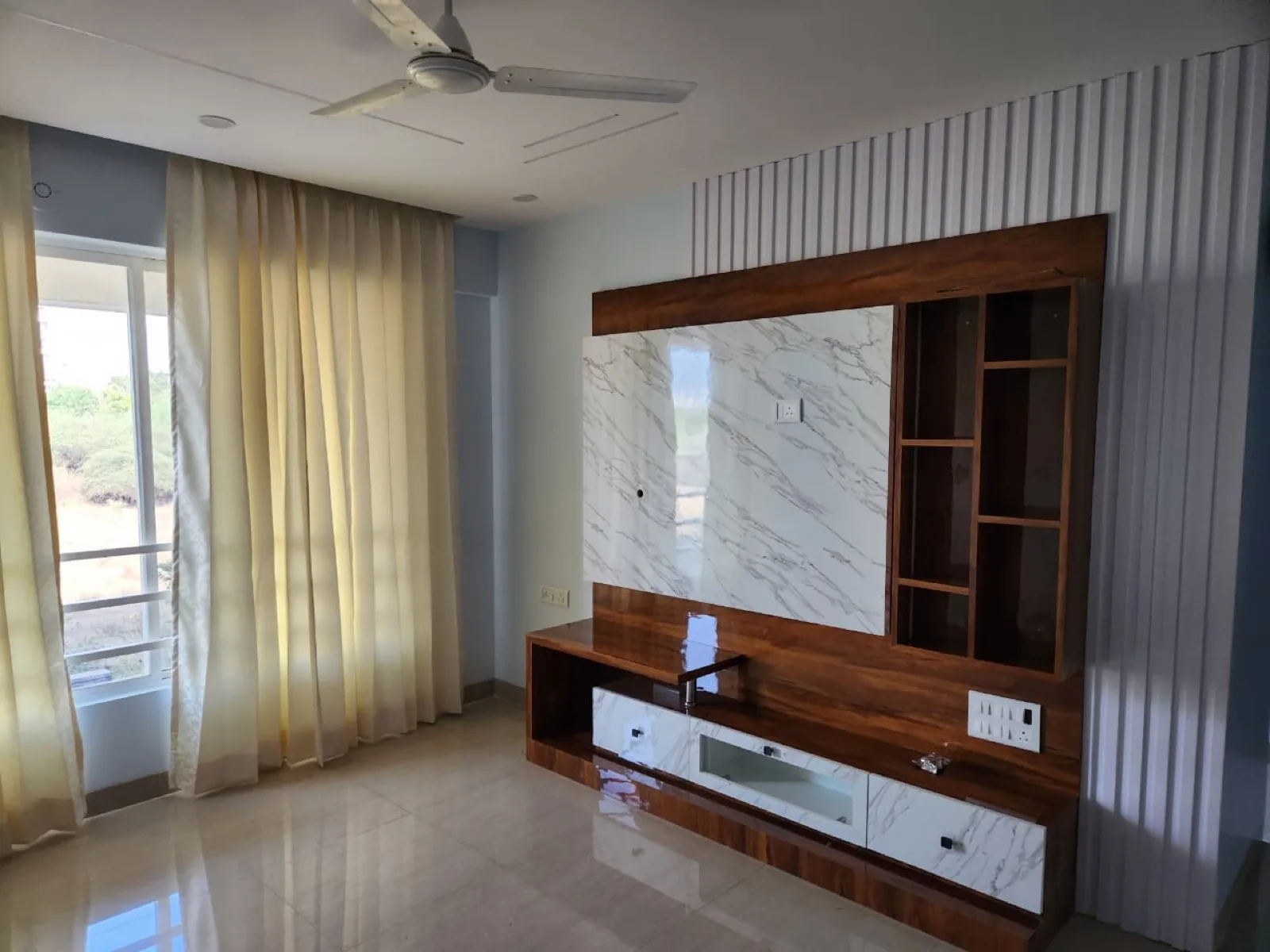
What to deliberately buy cheap
Marigold garlands, torans, rangoli colours, tea lights, paper lanterns and the diyas themselves should be inexpensive and treated as consumable. This is not a compromise — it is the correct call. These things are meant to be seasonal, they are meant to be replaced, and buying a premium version of something you will store in a box for eleven months is the actual waste in a Diwali budget.
Spend the saved money on the three permanent items above, or on nothing at all. A flat with good lighting and one finished wall needs very little else on top; it is usually the under-lit, unfinished room that has to be rescued by volume of decoration.
The one exception worth paying slightly more for is storage. A single labelled box that holds the festive things, kept somewhere reachable, turns next year’s setup from a two-day excavation into an afternoon. If you are building a loft or a utility cupboard anyway, say so at the drawing stage.
Decorating a 2 BHK without losing the walkway
Compact Pune flats fail at festivals in a predictable way: circulation. Extra footwear at the door, extra seating in the living room, people carrying thalis, and a corridor that was already the narrowest part of the plan. Decoration then gets added to the exact pinch points — a planter here, a rangoli there, a lantern on the floor — until two people cannot pass each other.
Decorate vertically in small plans. Walls, the pelmet line, door frames and railings take decoration without stealing floor. Keep the first three metres inside the main door clear of anything placed on the ground, including the rangoli if the door swings over it. Shoe storage that closes is worth more in that corridor on Diwali night than any decorative object you could put there.
If you host every year and the same bottleneck appears every year, that is a layout problem rather than a decorating problem, and it is fixable — usually with a shoe unit, a redrawn entry and better light rather than anything structural.
What can be done in a week, and what cannot
Be realistic about the calendar, because the gap between what people hope and what is physically possible is where rushed, regrettable work happens. Painting touch-ups, a single accent wall, deep cleaning, light fitting swaps and a decorative panel are comfortably a few days of work. They are the right answer when the festival is close.
A full false ceiling with concealed cove lighting, a modular kitchen, a built-in mandir unit, or anything requiring new wiring is not a week’s job and should not be attempted as one. Paint needs curing time. Electrical work needs testing, not just connecting. A carcass needs to be measured, made and fitted. Compressing any of these produces exactly the finish you would expect.
So the honest sequencing is this: do the quick cosmetic work before the festival, and book the structural work for immediately after it. Early November to February is the calmest and best-staffed stretch of our year, and the work is better for not being rushed. If a contractor promises you a full-home interior inside a fortnight because Diwali is coming, that promise is the problem, not the deadline.
Working with Perfect Home Decor
We handle false ceilings and cove lighting, painting and texture finishes, feature wall panelling, custom mandir and TV units, modular kitchens and full-home interiors across Kharadi, Wagholi, Magarpatta, Viman Nagar and the rest of east Pune — with one accountable team and a BOQ you see before you sign.
If your Diwali list keeps surfacing the same three items year after year, that is usually a sign they are worth building in rather than re-improvising. Book a free site visit and we will tell you honestly what is worth making permanent in your flat, what is better left seasonal, and what it would actually cost.
Our companion guide on getting a Pune home Diwali-ready covers the other half of this — deep cleaning, electrical load and safety checks, balcony diyas and society rules — and is linked under Related reading below.
Frequently asked questions
Three things: warm cove or profile lighting on its own dimmer, a properly built mandir unit with heat clearance and a dedicated task light, and one finished feature wall. All three keep working for the rest of the year. Garlands, torans, rangoli colours and tea lights should be bought cheap and treated as consumable — a premium version of something stored in a box for eleven months is the real waste in a festive budget.
Only if you start well ahead. A false ceiling with concealed cove lighting involves framing, boarding, electrical work, finishing and paint curing, and compressing that schedule shows in the finish. Close to the festival, the sensible scope is painting touch-ups, a single accent wall, light fitting swaps and deep cleaning. Book ceiling and wiring work for after the festival instead — November to February is the calmest and best-staffed part of our year.
It depends on size, material and whether lighting and electrical points are included. The main cost drivers are the back panel material (laminate, stone-look surface or marble), whether you want a carved or jali screen, the carcass material and hardware grade, and whether a dedicated task light, switch and socket are being added. We quote it as a line item in the BOQ so you can see what each choice costs before deciding — book a free site visit for a measured quotation.
Decorate vertically and protect circulation. Use walls, the pelmet line, door frames and balcony railings rather than the floor, and keep the first three metres inside the main door clear — including the rangoli, if the door swings over it. Closed shoe storage in the entry corridor does more for a crowded Diwali evening than any decorative object placed in the same spot.
We would avoid them. Adhesive panels and large-format wall stickers tend to take the top layer of paint with them when they eventually come off, and the repainting costs more than the panel did. If you want a wall to look different, texture paint is the cheapest finish that still looks deliberate years later, and fluted panelling or a stone-look panel are the durable options above it.
Related reading
Festivals
How to get your home ready for Diwali: cleaning, décor & safety checklist (Pune)
Step-by-step guide to preparing your Pune home for Diwali—deep cleaning zones, lighting and electrical safety, entryway and guest flow, balcony diyas, paint touch-ups, MC-friendly rules, and calm hosting.
Commercial interiors
Office and café interiors in Kharadi: what changes when it is a business, not a home
Kharadi's offices, cafés and clinics need a different kind of interior job to a flat — the deadline is the deliverable, finishes have to survive daily footfall, and most of the work is services coordination. A practical guide for anyone fitting out a commercial space in east Pune.
Home Interior Design
Home interior design in Kharadi: what a complete 2 BHK or 3 BHK actually involves
A practical guide to complete home interiors for Kharadi flats — what the scope really covers room by room, how an honest itemised quotation is built, realistic timelines, and the questions that separate a fair quote from a cheap one.